Stacoscimus Blog

Piet Mondrian

Published Thu 23 October 2008

De Stijl. "The Style." Really.

Not music-related per se, but certainly an important figure in the history of artistic movements.  Most certainly you've seen some of his works of art, although I personally hadn't been particularly aware of just what he was doing, when, or why.  Well, here are the answers, in order:

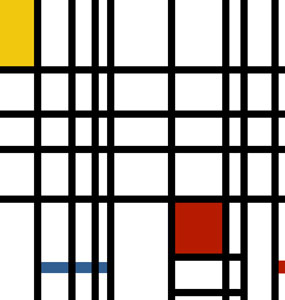
  • What: Neo-Plasticism, a Dutch style that I must only imagine led eventually to the Swede's version: Ikea.  Clean colors, shapes, and the full enthusiastic embrace of ideal forms alone -- it was a celebration of Plato, although potentially the founders didn't see it quite that way.  On the musical side of things, I tend to think of this as something in the way of 12-tone theory; the artists sought some idealized goal of perfection by deliberately avoiding naturalistic (and thus imperfect) displays of aesthetics, and favoring ideals.  Piet came up with his grid-based concept as a framework, and attempted to explore it as completely as he could: a black-grey grid with regions colored in the three primaries -- I'm reminded of Schoenberg's embrace of twelve "primary pitches" -- and hoping to explore the potential artistic relationships and statements that could be made within such confinement.
  • When: 1919 - 1931 or so; the Roaring Twenties.
  • Why: Abstraction and Cubism had begun to take the place of Impressionistic styles (excellent art history site here.), and Mondrian and his Dutch colleagues began to explore an extrapolation of Cubism (which was already attempting to abstract generalized forms and expressions from literal depiction) into a study of absolute form.  This movement was concurrent with an elaborate expansion of jargon and constructs in the field of psychology; one hundred years before, most such scientists were still at work isolating various brain regions and their functions, often through very brutal methods.  However, the introduction of a new study of behavioral psychology helped drive this charge toward absolute input and output in discrete scales -- one that would set the basis for an art that attempted to address the absolutes interpreted by the brain.

By placing art within a confined structure, we allow creativity to exist, by craftily manipulating a purposefully limited set of resources.  However, in the end, the art will fail to evoke emotion unless the audience is able to fully shift its mindset to match the prerequisite studies undertaken by the artist.  And so today, most of the public laugh at this type of art, and cringe at tone rows.  I know my heart is unmoved, by my mind is dancing.

Patronage by Royalty

Published Wed 22 October 2008

WHERE IS YOUR BACH NOW?

"As I had the good fortune a few years ago to be heard by Your Royal Highness, at Your Highness's commands, and as I noticed then that Your Highness took some pleasure in the little talents which Heaven has given me for Music, and as in taking Leave of Your Royal Highness, Your Highness deigned to honour me with the command to send Your Highness some pieces of my Composition: I have in accordance with Your Highness's most gracious orders taken the liberty of rendering my most humble duty to Your Royal Highness with the present Concertos, which I have adapted to several instruments; begging Your Highness most humbly not to judge their imperfection with the rigor of that discriminating and sensitive taste, which everyone knows Him to have for musical works, but rather to take into benign Consideration the profound respect and the most humble obedience which I thus attempt to show Him."  -- J.S. Bach, dedication of the Brandenburg Concertos, 1721.

It's profound just how gracious good ol' Johann had to be in deference.  It offends our modern-day sensibilities, grown out of a Lockian liberalism and a strong humanistic drive.  But it also points out an important aspect of today's political climate: music has always been sponsored through elaborate systems of patronage by a powerful few; it has not been at the whims of a public free market economy.  As such, continued investment of taxpayer dollars in the arts is highly desirable, and will continue to be.

More on the B'Burg Concertos later.  But a bit more food for thought: Bach wrote most all of this music specifically with a certain set of musicians at Köthen in mind -- and it's altogether likely that his familiarity with their particular abilities (or lack thereof) likely had something to do with the degree of difficulty of the parts he wrote.  Imagine: now, the Brandenburg concertos are treated as some kind of mythical divine gift from a past master (and surely they are!) but this master wasn't merely a master of tones on an abstract tapestry of sound, he was also a pragmatic master of recognizing individual talents and abilities, and playing to personal strengths.  Rampant speculation, of course -- I'd like to learn more to properly spin that.

a-ha - Take On Me, original cut

Published Tue 21 October 2008

Not to beat an already pulverized equine, but this is just mind-blowing to me:

http://www.youtube.com/watch?v=JohoUZ1U91A

Turns out that the world-famous 1985 hit, Take On Me, was a remixed rerelease of a version made in 1984 -- and it only took off after a studio dropped the money to make the classic video.  Listen closely for the Bowser's Castle music in the breakdown section.

Composers, Creativity, Vacuums.

Published Mon 20 October 2008

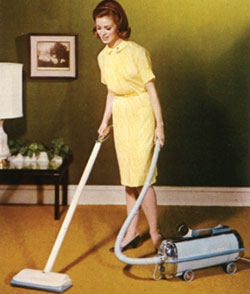
There is no creativity in this here
vacuum.

Composers and musicians have never ever ever created new music in a vacuum.  The idea that a musical genius could ever lock himself (I still struggle to find a good gender-neutral pronoun) in a dark room and produce music is flawed from the start -- this refutation is not a new idea, and is bandied about with ease and enthusiasm.  However, the depth of its truth isn't generally understood.  The idea being, most people might interpret this to mean that a composer tends to use SOME things inspired by others, and the rest is derived somehow from the magical mind of a genius.

Hogwash.  Complete hogwash.

I'm becoming more and more certain that any composers bold enough to succeed and influence are those who are unafraid to write exactly in the style of another person, and call it their own, or who deliberately and directly use motifs from extant sources.  Over time (and many repetitions of "experiment" an opus magnum or two or three might come out of the toil.  We ought to try to reclaim some of the "composer as technician" mentality.  Think of them as a memetic engineer.

An opus no.1 used to be somebody's first published work.  Now, it's any number of educational dissertations.  I don't mean to demean anybody -- I'm just trying to make a commentary on the processes in place.  If we're able to destigmatize the pressure of making a first composition excellent (by removing the requisite "Opus 1" tag), we could encourage more people to take the dive in the first place.

Aha - Take On Me

Published Mon 20 October 2008

Literal version of the video.  Oh, how these lyrics seem to match!

http://www.youtube.com/watch?v=8HE9OQ4FnkQ

This set of sound effects are so reminiscent of certain Super Nintendo games. Especially Shadowrun, the best SNES game ever to be. Underrated too. For more, watch the Fugitive - the score is the same.

Tunes: Oh, Lady Be Good!

Published Sun 19 October 2008

Pretty please?

The first of many to come, I imagine.  I'll be posting on this blog various jazz tunes in the form of recordings and/or sheet music -- in the near future, I'll be sticking to some ricky-ticky jazz classics from the prewar era if possible, since this music is much more diatonic and easier to learn.  The vocabulary gets into our heads rather naturally!

Lester Young, of course, was a giant of early jazz tenor saxophone, along with such names as Coleman Hawkins.  During his Basie years, Lester got a chance to record numerous times as featured soloist; on October 9, 1936, he laid down his first set of four tracks with the so-called "Jones-Smith, Incorporated," consisting of Carl Smith (tp), Count Basie (p), Walter Page (b), Jo Jones (d), and occasional vocal tracks by Jimmy Rushing.  Oh, Lady Be Good!, a Gershwin brothers tune from the eponymous Broadway musical, was among them; it features the Prez at his finest -- young, spirited, and clever.

The original track, Lester's solo isolated, and then his solo slowed down:

Notice how very pentatonic Lester is.  He favors the 6th very heavily; on his G chords the note "E" stands out.  Look out for Ebs used mainly as passing tones -- this qualifies as the b9 of the V7 chord, but it hadn't yet developed the autonomy it would have under Bird's fingers.  Lots of Lester's licks begin on the third of the chord (as Paul Desmond's did later), and arpeggiate up to the ninth.  There are also a few chromatic enclosures to learn.  Huzzah for the key of G!  Finally, look for rhythmic displacements of the same motivic material.  It's syncopated hemiola.

Sheet Music PDF

Haydn's Head - Symphony No.1 in D Major

Published Sat 18 October 2008

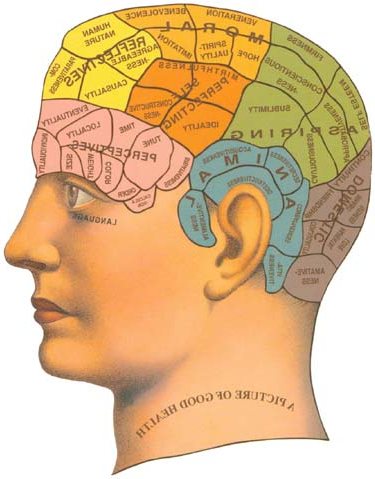
This head is not Haydn's, but has another interesting trait.
Ten points to the one who spots
it!

You know, the one that was severed by graverobbers trying to associate his cranial topology with intellectual capacity?

The process of stealing the head was, apparently, not pleasant, since decomposition had set in and the smell was strong (Ed. note: @!!?!?!?!) However, Peter and Rosenbaum succeeded in cleaning the skull and duly carried out their phrenological examination. Peter declared that "the bump of music" in Haydn's skull was indeed "fully developed". Afterward, Peter kept it in a handsome custom-made black wooden box, with a symbolic golden lyre at the top, glass windows, and a white cushion.

Quite seriously, Haydn's skull was pilfered, measured, passed around, hidden in a mattress, left behind for musicologists to show off at dinner parties (I am reminded of a certain fellow by the name of Hannibal), and ultimately only found its way back to the decayed corpse of Haydn in 1954.  Nineteen Fifty Four.  In other words, for well over a century, the disembodied head of the highly esteemed father of the (Big-C) Classical symphony and the string quartet was being paraded around and gawked at by esteemed musicians at the esteemed Gesellschaft der Musikfreunde in Vienna.  I am not making this up.  It is entirely plausible that Brahms was able to poke his fingers through poor Haydn's eye sockets, and giggle, even if it's more amusing than it is likely.  But if he did, he certainly would have done it with esteem.

In penance for posting a purely Wiki account (however awesomely entertaining it might be), I'll provide you with Haydn's Symphony No. 1, composed 1759 or so.  The fledging form of the symphony was actually something rather new-fangled; the ripieno concerto is probably the closest thing we had previously.  It sounds a tad ricky-ticky by even Mozartian standards, but remember what a revolution even its grand opening Mannheim crescendo represented.  Only three movements here (as the form was modeled largely after the three-movement opera sinfonias of the period), but still following a general fast-slow-fast pattern.  Notice the melody + harmony textural characteristic -- Haydn was unafraid of punctuating his counterpoint with full-fledged chords, a far cry from the even- but heavy-handed approach of many Baroque composers.  Some day, I fully intend to learn to reliably realize figured bass, but that's more a back-burner goal; I think we're all rather pleased to see the continuo vanish.

In 1759, George Washington got married, and in 1954, the Soviets went nuclear.  Sidebar: Who uses the term "eye" to refer to the burner on the stove?

Technological Advancement

Published Fri 17 October 2008

Yuri, hard at work as always. 'Shopped!

It's been often stated that technological advancement has helped propel humanity towards a life of leisure, increasing our free time and reducing the amount of time we need to work.  But despite this, it seems that most people are all willing to put in overtime hours instead of doing what they might otherwise claim they desire: spending more time with children.

Why is it that this has happened?  Perhaps this failure to work less, despite our technologies, is only an apparent unbalance.  Consider: The young stay young longer.  College is largely the next high school, and graduate school is the next college.  As we've needed to specialize more completely, we've needed to bolster our educational credentials; during this time, we are no longer able to be productive members of society.

This is, of course, rampant speculation.  But it is possible that the benefits of our societal advancement has gone disproportionately to extending the leisure lifestyle of our children over a timespan of years, and not our adult workers in daily increments.

On Beethoven's Conducting

Published Fri 17 October 2008

Among the violinists was the composer Ludwig Spohr (1784-1859), who was astounded by Beethoven's conducting style, noting how he used "all manner of singular bodily movements. As a sforzando occurred, he tore his arms, previously crossed upon his breast, with great vehemence asunder. At piano he crouched down lower and lower to show the degree of softness. If a crescendo entered he gradually rose again and at a forte jumped into the air."

...From the website of the Northwest Sinfonietta.  I can only imagine Beethoven jumping up and down, as enthusiastic as he could be -- but also as unpracticed and unstudied as an overenthusiastic college freshman (or perhaps a certain wascally wabbit? Bonus points: What is the song played by Bugs on the Sousaphone?  Answer here).  Beethoven was no "conductor" in the overly-qualified sense we are familiar with today, but he was a consummate musician.  If the orchestras of the early 1800s are anything like those of today, I imagine that his prestige as preeminent composer of the half-century made the orchestra at this particular charity concert as attentive as could be.  And the audience surely was drawn tremendously into the performance.

For more information on Symphony No.7, by the way, check out this NPR story.

Religion reapplied

Published Fri 17 October 2008

The modern-day practice of religion is generally a form of paying respect to those who came before us -- either by honoring their lifestyles, traditions, or the base of knowledge they were able to leave us.  The Abrahamic religions by far are the most prevalent, and we owe Abraham a great deal of respect for this.  But in part of that, we should never lose sight of the fundamental congruence between Christianity, Judaism, and Islam.  These three faiths are as inseparable as the Trinity that is so familiar to many Americans.  To different degrees, these three systems of worship honor lifestyles, traditions, or knowledge that ancestors have passed down to us; I'd like to suggest that the future holds a modification of the ratio of these observances, and it will bring much greater awareness to all.

Currently, most Christians in America focus principally on the knowledge component of their faith, and secondarily on the traditions associated with worship.  Save certain minor sects, however, lifestyles have been abandoned.  American Jews are less beholden to the dogmatic knowledge and also more likely to observe religious holidays through careful observance of traditions which emulate lifestyles common during the foundation of their faith.  The most orthodox among the American Jewry even still observe a Sabbath free of technological artifice.  In my experience, Muslims in America generally display a great richness of all three components of respectful heed.

There was a time when all the power went off at my old house at 1440 Broadway St., and all four roommates and friends ended up sitting around a couch drinking wine, eating cheese, enjoying each others' company, and decreeing fullthroatedly that we should regularly cut the power in order to foster the celebratory perspective of life.  It never happened.

I wouldn't want to advocate a particular faith, but I certainly would want to suggest that it would behoove us all to observe periods of archaic lifestyles, rather than focusing on traditions or on dogmatic knowledge.  And I suspect that for the reasons I crave this movement, our religious observances will collectively shift to match this imperative.

Newer Entries Older Entries