
Aside: "Finch" is really what the adjective that SHOULD be used to describe a person who is from Finland.
P.S. No offense meant. If you'd like more Python fun, please see this YouTube.
Published Fri 17 October 2008
Published Thu 16 October 2008
This is almost beyond description. Simply unbelievable to hear this -- not sure where it came from though! The track is "I Heard It Through The Grapevine." There's no question of the pure energy of this singer, nor his incredible vocal control. Listen to the strength and richness of his falsetto (and weep for his dutiful vocal cords). However, hearing him this way without obscuring instrumentation is a vocalist's dream. The most refreshing aspect? No pitch correction. Zip. Nada. No AutoTune. Blast you, Antares, you make vocalphiles like me very grouchy!
There are a few deliciously humanly pitchy spots that would never ever make it through a modern production studio's vigilant watch. Actually, I suspect most of the take never would. This vocal track sounds like one of many: you can hear some strain in the voice, either from stretching for high notes, fatigue, or both -- regardless the cause, it imparts a truly personal and meaningful edge; a hit was born. The year was 1967 and the height of summer in Detroit sweltered. Barrett Strong, of "Money (That's What I Want)" fame, and Norman Whitfield had written the song and were working hard to coax the performance they wanted out of Gaye. From Ralph McLean at the BBC Northern Ireland:
…it wasn’t an easy experience for Gaye though and he recalled years later that “Norman and I came to within a fraction of an inch of fighting”…he added that “he made me sing in keys much higher than I was used to…he had me reaching for notes that caused my throat veins to bulge”. Despite this friction or perhaps because of it Marvin and Norman created a truly unique vocal take.
Whatever the drama surrounding it, the results are timeless, and if you're familiar with the studio setting, I imagine you can probably hear grit and summer sweat all over this session. Here's the isolated vocal track:
http://www.youtube.com/watch?v=87FjkqtK67o
This video also demonstrates that Marvin Gaye was unafraid of lip-synching on television. I give him a pass; at least it's not because he was afraid of performing without a computer there to fix him up.
Published Wed 15 October 2008
Once upon a time, before even shouting "booooo!" seemed to be the universal sign of disapproval (or is that... approval?), hissing was an established and socially accepted way to register ones discontent. Nowadays, of course, it survives principally as a certain bit of spoken slang, but is no longer a singular act of disdain by the masses. Goodness gracious, why not!? As recently as 1917, some folks were jailed for exercising their right to voice unvoiced fricatives. Do we not owe them something, some sense of sincere esteem?!
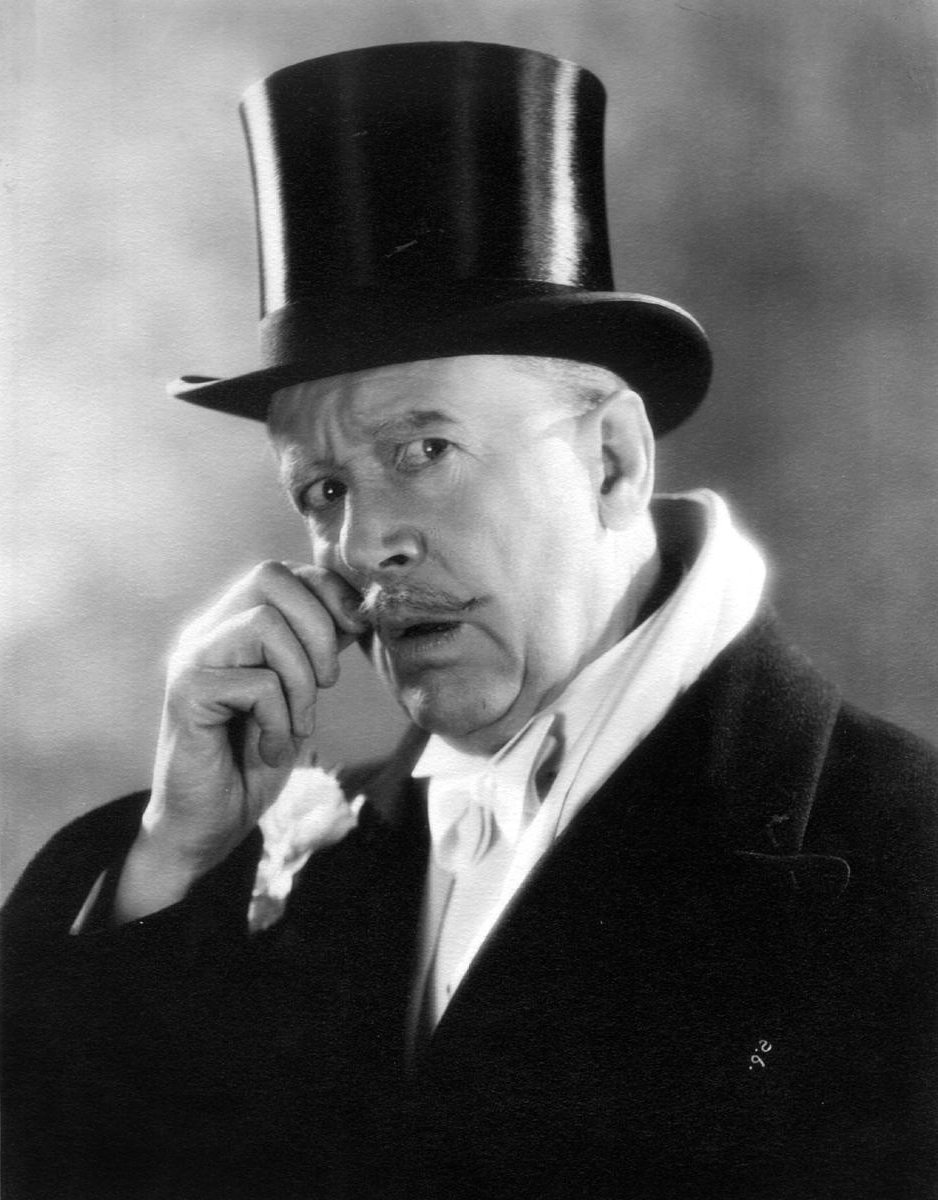
I disapprove (sssssssssss!). A hiss in a modern socially polite context wouldn't be any more acceptable than a loud chorus of "boo!" (or a communist), but at a raucous event such as a sports match or a presidential debate, a hiss would resonate loudly and strongly; however, its placement high up in the frequencies audible -- well over 10kHz -- keeps it from interfering too much with the proceedings. The human voice resonates at a spot much more comfortably couched at less than half this frequency, so speakers could continue on without being significantly drowned out. Would not this, then, be a more polite way of conducting business? I aspire to a more prim and proper age of group dissent, when it was slightly less disruptive! I also have a wholly undue admiration for top hats.
There's also an interesting speculative connection between hissing in disapproval as a goose would and the phrase "flipping the bird." Certainly is a tantalizing possibility!
Published Tue 14 October 2008
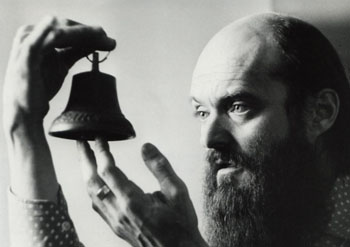
"Tintinnabulation is an area I sometimes wander into when I am searching for answers - in my life, my music, my work. In my dark hours, I have the certain feeling that everything outside this one thing has no meaning. The complex and many-faceted only confuses me, and I must search for unity. What is it, this one thing, and how do I find my way to it? Traces of this perfect thing appear in many guises - and everything that is unimportant falls away. Tintinnabulation is like this. . . . The three notes of a triad are like bells. And that is why I call it tintinnabulation."
Quite an amazing description, I should say, by Estonian composer Pärt, describing his self-created form of composition. It has been said that true artistic expression and creativity can only be realized after imposing a certain degree of restraint on the art (this is somewhat appropriate considering Estonia's relatively dimiunitive size -- it is only slightly smaller than New Hampshire and Vermont combined). The restraint pioneered by Pärt is a strict adherence to two voices; the lower arpeggiating and the upper moving stepwise. Upon listening to his descriptions, one begins to wonder if he has a degree of synesthesia, or an altered/transcendent way of hearing music all his own. Regardless, Für Alina (1976) has something to offer everybody with a penchant for contemplation.
Arvo in his own words:
http://www.youtube.com/watch?v=c08i_9gumJs
I've ranted before about the failures of much Twentieth Century music to speak to its audience, but I think that the return in the mid-late century to principles of consonance and dissonance palatable to the lay ear was a tremendous step forward. Minimalism was a long-anticipated step back into the familiar waters of implicit tonality, like a hot tub cleaning off the tarnish of tone rows. Perhaps it's unsurprising that some of the pieces were and are very simplistic, given the artifice preceding it. However, one common criticism of minimalism that should certainly not be applied to Für Alina would be that of emotional blankness -- rather, the piece speaks insistently at emotional drives.
Published Mon 13 October 2008

Quite a few are up on Ted Tjaden's site, which has a ridiculously impressive collection of sheet music and information. Many of these are particularly hard to find, and haven't yet made their way to the IMSLP Petrucci Music Library, so Ted's page is a great resource. In addition to classic rags, he's also compiled an impressive list of ragtime's predecessor, the cakewalk. Ted writes:
Although the American cakewalk dates back to the early days of slavery, the cakewalk as a distinct music and dance style had its formal beginning in the 1870's and reached its peak of popularity at the end of the 19th century and early 20th century. Unlike classic piano ragtime, cakewalk music was meant to be danced to and often performed by a small orchestra or band. Although cakewalks were generally lightly syncopated, their melodies and harmonies were generally not as sophisticated as those found later in the classic rags of Joplin, Scott and Lamb.
If you're like me and foster a healthy (I swear!) infatuation with this sort of old music, I urge you to take a look!
Published Mon 13 October 2008
Keeping dem doggies movin'. Redoing the CSS, working on essays, chugging along. Hopefully more up and running soon.
Published Mon 06 October 2008
I’m a little late on getting this one out, but this is phenomenal work! Very very clever stuff, with the best use of AutoTune I’ve never ever thought of. It’s so eerily awesome — Will.I.Am watch out!
http://www.youtube.com/watch?v=zxGKlrS9SxE
This fellow is halfway between Screech from Saved By The Bell and every friend I’ve ever had. Combined. Also, the head bob at 0:14 is fantastic. The consonants “f” and “ck” are both unvoiced, so a beep in the middle sounds fantastically realistic. Very smart. I love keytars.
Published Mon 29 September 2008
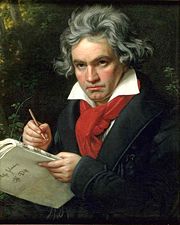
Beethoven's Third Symphony, "Eroica" has quite the interesting story behind it, and is often cited as a landmark composition which separated the Classical era to the Romantic. It expanded tremendously on the symphonic form, and was many times longer than a comparable symphony by Mozart or Haydn. The excellent San Francisco Symphony -- at Keeping Score -- has a sensational Flash-based analysis of the history of the work, as well as a superb multimedia score-reading section. Additionally, composer W. A. DeWitt of Colorado has put together a thorough measure-by-measure analysis at his dedicated website. It's a tad long, but very thorough, and the piano reduction is written in! Highly recommended, most certainly!
Meantime, Chip is downstairs playing some piano --and doing pretty ridiculously well. He's a better sight-reader than I am I think, blast him.
Published Thu 18 September 2008
Bobby McFerrin is a master of music, but also of the arts in general -- his concerts are focused on breaking the audience free of their bounds and investing themselves personally in the performance, becoming performers themselves. Removing people of their fears and encouraging them to expore music is the best way to educate and evangelize!
http://www.youtube.com/watch?v=MVVUMNv1t9w
This is fantastic! Syllables aren't important - the language is music. The minor pentatonic is the basis. You can see when the audience starts to get away from him and begins to applaud instead of investing themselves, and Bobby calls them back in a way that's not rude and DOES acknowledge their appreciation, but he still strives with such certainty to maintain the shifted frame of mind shared by the room. It's magical because it's like nothing this crowd has ever had the pleasure to participate in, and also so fearlessly. They sit on the edges of their seats, eagerly anticipating whatever might come next, what new discovery the next note might hold; all the while, rising within them is surely a certain glee and elation.
Sensational!
Published Wed 17 September 2008
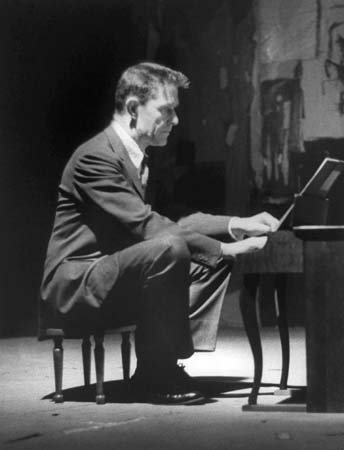
There seems to be a pointed dearth of groundbreaking composers these days; at least, it's difficult to pinpoint those who are truly revolutionary and inspiring leaders of the art, since there's no longer a sense of celebrity attached to knowledgeable and skilled art music masters. Why is this?
I suspect the reasons are (at least) two-fold: First, we have been trapped by the 20th-Century movement, which has shackled "high art" -- already an outmoded concept, but still prevalent in today's mindset because of its natural origins in the psyche -- to a tradition that purposefully distanced itself from the tastes of the common ear, and all naturally-arising theories of consonance. This supposedly bold and intrepid and intellectually-inspired venture into the wilderness of atonality turned out only to be an elaborate and self-deluding parlor trick, fit for a panflash two bottles of Merlot into a dinner party, but unsuitable for wider consumption and appreciation by the ears of the general audience as well as the greater and secret chagrined angels of passionate musicians.
Sadly, musicians and composers aspire to impress by embracing (and truly enjoying, no doubt) a music that the greater public has no interest whatsoever in; those who choose to pursue otherwise tend to be those scoffed at as "pedestrian" by our overly-schooled and under-educated "professionals". This feeds directly into the second part of the problem, which is perpetuated by those aspiring composers leftover to pursue traditional harmonies.
Therefore, secondly, we can describe how our flirtation with Neoromanticism has nearly already been abandoned simply because the composers willing to dabble in it, however good their intentions may have been, simply lacked the common cultural familiarity and excitement with the style of harmony prevalent in the late Nineteenth Century, or they lacked the musicianship or fierce musical acuity necessary to write well for their chosen ensemble or instrument as well as the driven desire to learn.

So where are those who might be masters of this art? Off composing a safer and more freely expressive form of avant-garde music where rules do not apply! Or perhaps, they're seeking refuge in tone-rows and pretending their intellectualism will be recognized by an audience of living and breathing humans. In any case, they are far too intimidated by the great masters who have been elevated by the surging gilded platform of historical idolization to ever study their works in an attempt to emulate, duplicate, and surpass. Instead, musicologists do the shoe-shining work, but with the submissive aim of attempting to explain the mysteries of their genius analytically, without ever envisioning the goal of emulation, assimilation, and evolution. The dialectic motive is lost if we are content to describe our starting material without following the process through to its desired conclusion!
We have, as a whole, thrown in the towel on aesthetics and tried to create another version of our own, where we could hide behind the veil of highbrow criticism and the cerebral. How ironic that musicians -- artists of sound -- should sacrifice sonority altogether and instead play games with mathematical constructions! There is a similar argument to be made concerning the prevalence of computer-based notation's continued abuse as a compositional tool, but that's a digression to revisit another day.
There is incredibly good reason to pick up right were tonality left off -- and to incorporate the attempts of jazz music to do exactly that. But that is another story entirely, since it introduces the possibility of allowing Romantic idioms to die out and replacing them with cutting-edge exploration.
I due caveat: I don't wish to issue a call to arms and a restoration of century-old styles! Rather, our initiative must be to seize the technology that has allowed us to transmit all forms of music new and old, and begin creating works anew, without hesitating to reclaim what has been the art music community's most successful contributions to date. Let us not forget that the best composers of all time, as listed by music professionals and the public alike, fall by and large into a timeframe ending one hundred years ago.
UPDATE: The debate over "low art" and "high" art is probably one that continues at every step of the memetic evolution of art and culture; it's just that it tends to be forgotten over time, or has been obscured by legitimate social and economic constructs which hindered their initial definition in the first place. Nonetheless, the patrician's struggle to embrace the cultural movements initiated by the plebians is always a difficult one, but is even more so inevitable.